In senior living dining, stability can quietly create blind spots.
The kitchen looks clean. Service runs on time. Residents seem satisfied and no one has raised concerns recently. From the outside, everything looks fine.
That is usually when small details start to slip.
Compliance challenges rarely start with a major breakdown. They start with decisions that feel harmless in the moment. Labels get a quick glance because the team is short-staffed. Preventive maintenance gets pushed back because the equipment is still running. A dish machine cycles through an entire service, and no one stops to confirm that sanitizing solution levels are properly calibrated and documented.
On their own, none of these feel urgent. Together, they build real risk.
In senior living, compliance lives in daily habits, not in policy binders. It shows up in what gets checked, verified, documented, and reinforced every day. When those habits become inconsistent, the impact does not stay contained in the kitchen. It reaches residents, staff, and leadership.
What Residents Experience When Systems Are Strong
Residents rarely think about compliance, but they feel its results every day.
They experience consistent meal quality. They see organized kitchens and confident staff. Service feels steady and predictable. That consistency builds trust in the community as a whole.
Dining in senior living is more than nutrition. It is a daily touchpoint that shapes satisfaction and quality of life. When systems are strong, dining feels seamless. When they drift, the disruption becomes visible. Delays increase. Equipment problems interrupt service. Team members seem rushed or uncertain.
Even when residents cannot name the specific issue, they recognize when something feels off. Strong compliance systems protect more than food safety. They protect resident confidence.
Strong Standards Shape Culture
The workforce environment in senior living remains competitive. Communities are working hard to attract and keep skilled culinary professionals. Compensation matters, but the work environment often carries just as much weight.
High-performing employees gravitate toward places where standards are clear and leadership is present. Clean, organized kitchens signal discipline. Consistent processes signal accountability. Equipment that works signals investment in the team.
When standards are inconsistent, the best people feel it first. Frustration builds. Pressure increases. Confidence in leadership starts to erode. High performers do not stay long in environments where expectations shift or oversight disappears.
Turnover compounds the problem. New team members take time to train. Consistency becomes harder to maintain. The whole system grows more fragile.
Strong standards do more than prevent mistakes. They signal that excellence is expected and supported. Compliance is not separate from culture. It defines it.
Leadership Presence Sets the Standard
No checklist replaces engaged leadership.
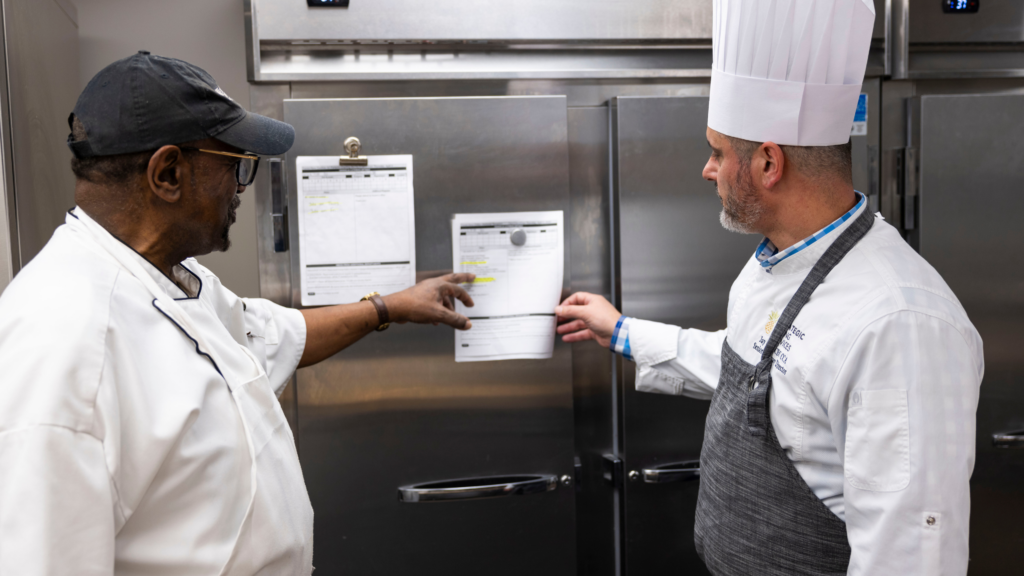
Consistent, intentional walkthroughs remain one of the most effective tools in any senior living dining program. These moments let leaders verify standards, coach team members, and reinforce expectations in real time. A good walkthrough should naturally cover labeling accuracy, hot and cold holding temperatures, storage organization, dish machine sanitation, overall cleanliness, and direct conversations with the team about what they are seeing day to day.
When managers walk the operation at the start and end of each shift, small issues get corrected before they become patterns. Just as important, the team sees that standards actually matter.
For newer dining leaders, fresh perspective is genuinely an advantage. Accepting “we have always done it this way” without examining it is where complacency takes hold. Understanding how food moves through the building, how documentation is kept, and where gaps might exist creates a stronger foundation for long-term success.
From an executive standpoint, distance creates blind spots. It is easy to assume departments are running well when there are no visible problems. Regular review of quality assurance findings, maintenance schedules, and training progress keeps leadership connected to what is actually happening.
Visibility is not about control. It is about responsibility. Leaders set the ceiling. If oversight fades, standards follow.
From Assumption to Assurance
The cost of assuming you are covered rarely shows up right away. It builds quietly as verification becomes less consistent and oversight becomes less visible.
Residents trust that the system is working. They should not have to think about what protects them behind the scenes. Leaders do not have that luxury.
Structured planning, ongoing training, routine quality assurance reviews, and shared accountability are what keep standards from drifting. They ensure that what residents experience every day is backed by systems that are intentional and strong.
In senior living dining, compliance is not about avoiding problems. It is about honoring the trust that residents and families place in the community every single day.
Assumption creates vulnerability. Verification creates assurance. In communities entrusted with the care of older adults, assuming coverage is a risk no one can afford.