Most dining teams are sitting on more data than they know what to do with. Inventory levels, purchasing trends, participation patterns, production forecasts, resident preferences, vendor pricing, labor pressures. The information already exists across nearly every part of the operation.
The challenge is turning it into decisions quickly enough to support the day as it unfolds.
In many senior living communities, digital platforms still operate in silos. Purchasing lives in one place. Menus live somewhere else. Forecasting happens manually. Staff spend valuable time hunting down operational data that should already be talking to itself.
At the same time, resident expectations keep climbing. They’re shaped by restaurants, hotels, travel, and the broader consumer experiences residents live outside the community. Senior living dining doesn’t get to exist in its own bubble anymore.
Communities keeping pace are building environments where systems share data, planning sharpens, and managers know what’s happening before it becomes a problem.
Technology Works Best When It Supports the Operation
Conversations around dining and hospitality experience platforms often get stuck on software features. Dashboards, reporting capabilities, integrations, what the interface looks like. The real question is how well those tools hold up once day to day service execution is running around them.
When information flows across the broader community ecosystem rather than living in separate departments and data systems, the pace of the workday changes. A chef building menus can immediately see product availability and pricing shifts. Purchasing teams have visibility into production and ingredient needs before orders go out. Participation trends and the factors influencing resident choices become visible in real time rather than weeks later in a report.
When leaders can see the operation clearly, they can act while there’s still time to affect the outcome. A delivery comes in short. A menu item trends higher than expected. Ingredient costs move fast. Connected workflows surface those moments before they stack up.
The goal isn’t to take operators out of the equation. It’s to give them better information so their judgment has something real to work with.
Why Integration Matters More Than Features
Many communities already have solid digital tools in place. The problem is those platforms rarely talk to each other.
Inventory sits in one place while menu management lives somewhere else. Purchasing reports update separately. Reservations and POS systems often aren’t connected to back-of-house operations. Planning still relies on manual spreadsheets and historical assumptions that take hours to pull together.
Workarounds fill the gaps, and those workarounds quietly eat away at the workday. Managers spend time chasing information rather than using it. Culinary staff make calls without full context on inventory or cost impact. Reporting starts telling teams what already happened instead of helping them adjust earlier.
The friction compounds as communities and multi-site provider organizations grow without a scalable and well-integrated dining ecosystem.
When platforms share data, culinary teams can immediately see how a short delivery affects recipes, menu execution, and what needs to be reordered. Substitutions update across the board rather than requiring a round of manual corrections. For multi-site culinary leaders, standardized data and real-time performance dashboards give regional and system-level leaders the visibility needed to make proactive adjustments.
The bottom line is that senior living dining moves too fast for disconnected systems to keep up.
Forecasting Has Become a Daily Operational Advantage
Unlike traditional restaurants, where the menu is relatively fixed while the customer base shifts daily, senior living dining environments rotate menus and cuisine types while the resident population remains largely constant.
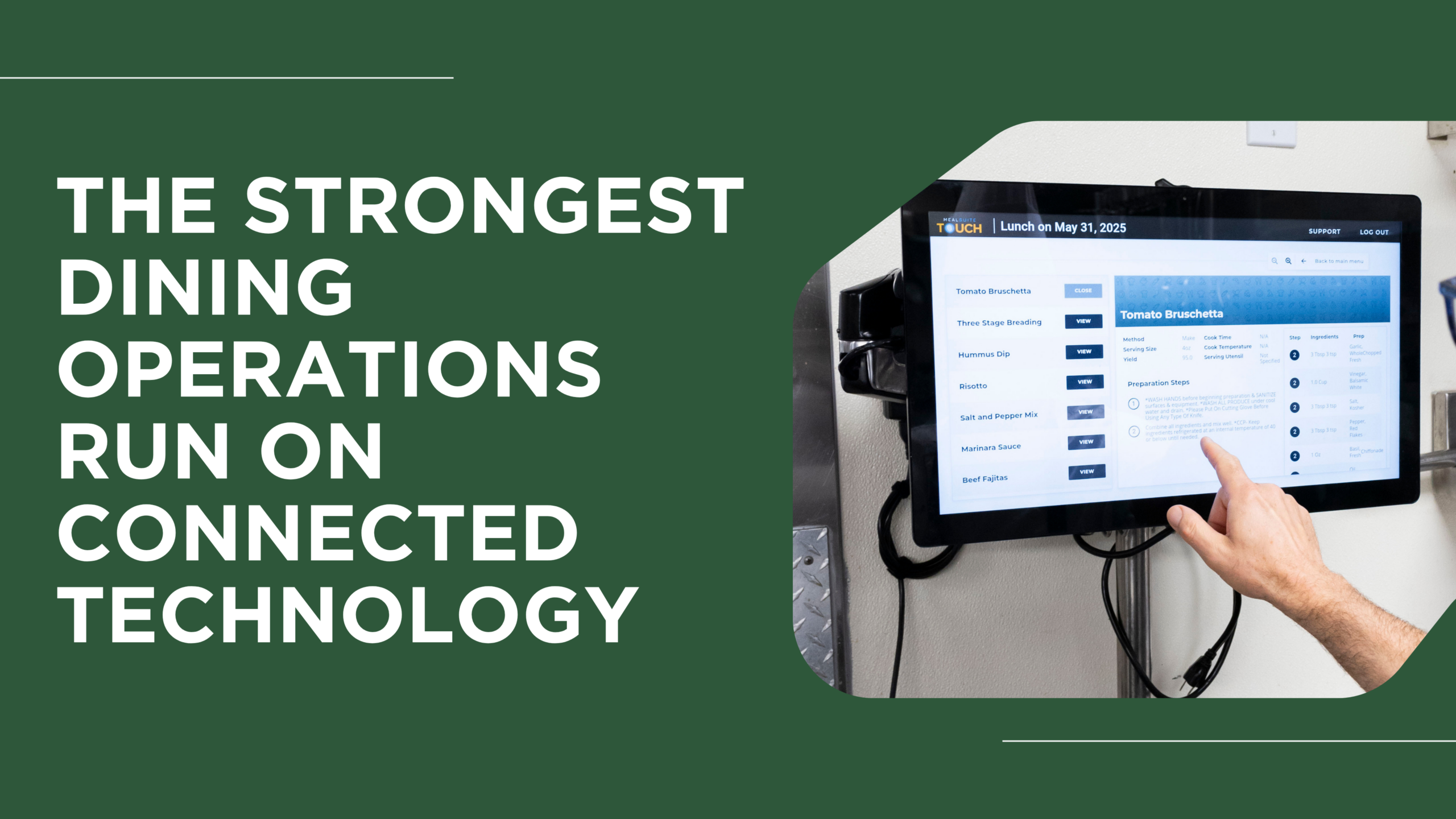
This difference creates both challenges and opportunities. Consistency becomes harder when culinary teams are preparing different menu items every day. Restaurant-quality dining depends on standardized recipes, production processes, and training that allow teams to execute consistently regardless of who is working a particular shift.
Residents notice those differences. Confidence in a dining program is built through reliable execution, not just creative menus. Strong systems help support that consistency by giving teams access to recipes, production guidance, and operational data that help deliver quality every day.
At the same time, a stable resident population creates valuable planning advantages. Participation history helps directors anticipate volume. Weather shapes menu preferences. Day-of-week patterns influence ordering behavior in ways that become increasingly predictable over time.
A warm afternoon tends to pull participation toward salads and lighter options. Cold weather moves demand toward soups and prepared entrees. Certain menu items consistently outperform on specific days. Those patterns become reliable pretty fast.
The payoff reaches well beyond the kitchen. Sharper demand planning affects purchasing, labor, inventory, and waste reduction throughout the week. The dining directors gaining ground right now aren’t running on gut instinct alone. They’re using what the data shows to stay a step ahead rather than perpetually catching up.
Training Changes Everything
How effectively integrated systems deliver results ultimately comes down to the people using them.
The most common mistake is treating training as purely technical. Staff learn where to click, how to move through the system, how to complete required tasks. What gets skipped is the reasoning behind it.
The implementations that stick and thrive teach the tools through the eyes of the person using them.
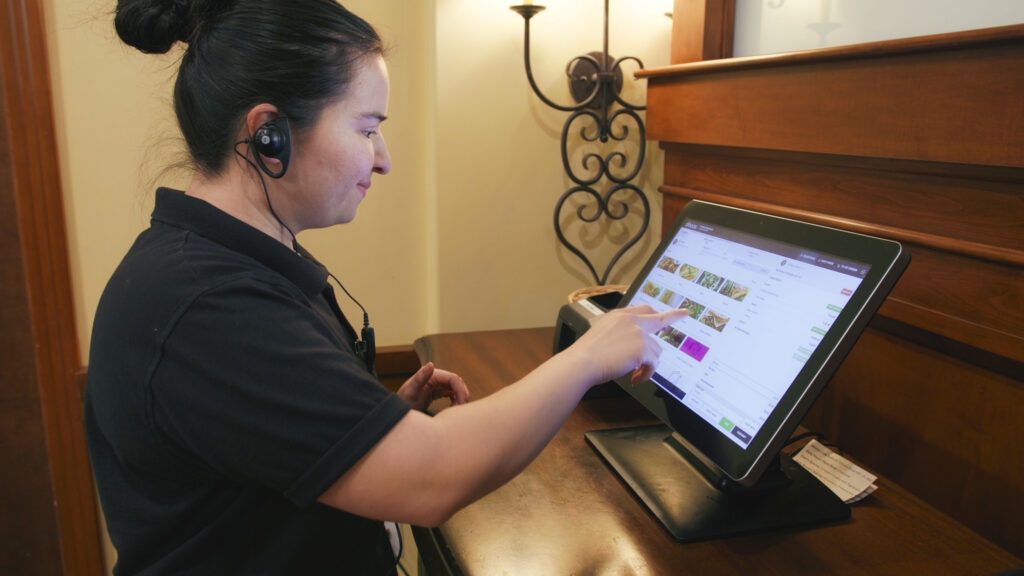
A chef working inside a menu and culinary management system should understand how to use it to solve real problems. How to build menus more efficiently, read participation trends, check ingredient availability, and anticipate production needs with real confidence. That changes how fast the tool becomes second nature.
Add resident-facing portals and connections to broader community systems, and culinary leaders gain a more complete view of participation trends, resident preferences, and operational performance. The result is greater ownership and a stronger understanding of how daily decisions impact the overall dining experience.
Dining Technology Is Becoming More Consumer-Aware
One of the most consequential shifts in senior living dining isn’t happening inside senior living at all.
Residents arrive with expectations built from years of eating at good restaurants, staying at hotels, and traveling. That history travels with them and shapes what a good meal is supposed to feel like.
And it’s changing how operators evaluate the tools they buy.
The strongest dining programs are looking beyond senior living for ideas and inspiration. They’re paying attention to broader hospitality trends, consumer behavior, and the market signals that keep reshaping what residents want.
AI is accelerating that. It’s already helping operators move through data faster than traditional reporting allowed, cutting the time spent compiling numbers and increasing the time spent acting on them.
Connecting that operational data with what’s happening outside the building is the next step. More operators are testing tools that can surface local dining trends, track shifting consumer preferences in their markets, and help menus adjust more dynamically without waiting for an annual study or outside consultant. That kind of market awareness used to require real outside investment. Now it’s becoming part of the day-to-day picture.
Access to behavioral data from hospitality groups, restaurants, and large consumer brands is helping operators understand how expectations are shifting in real time. The goal isn’t imitation. It’s learning from those industries deliberately while building dining experiences that still feel personal to the community.
The Goal Is Better Decisions, Not More Technology
The programs gaining ground aren’t adding tools for the sake of modernization.
They’re building environments where information moves clearly, planning tightens, purchasing gets ahead of need, and production aligns with what residents actually want. Managers stop chasing data and start using it.
Technology works best when it supports hospitality rather than distracting from it. Connected platforms help operators handle complexity behind the scenes so the resident experience feels consistent and well-executed in the dining room.
The platforms will keep evolving. AI capabilities will expand. Demand tools will get sharper. Integration will improve.
The most successful operations aren’t necessarily the ones with the most software. They’re the ones using better information to make earlier calls, support their people, and deliver dining experiences worth coming back to.