Most self-operated senior living communities are doing more than they think, but too often, that work isn’t fully experienced by the people it’s meant for.
Walk into two senior living dining rooms and, on paper, they may look nearly identical. Meals are prepared according to the recipes, service is moving, and the room is full. Everything appears to be working as it should. And yet, one room feels quiet while the other feels alive and engaging..
The distinction in dining experiences often stems from emotional connection and genuine hospitality rather than menu, budget, or staffing. Dining is crucial for residents and families; it shapes and anchors their day. Let’s approach each meal with thoughtful hospitality as the base.
The Power of Telling Your Dining Story
A meal can be prepared well and still feel routine. What changes the experience is when people understand what went into it.
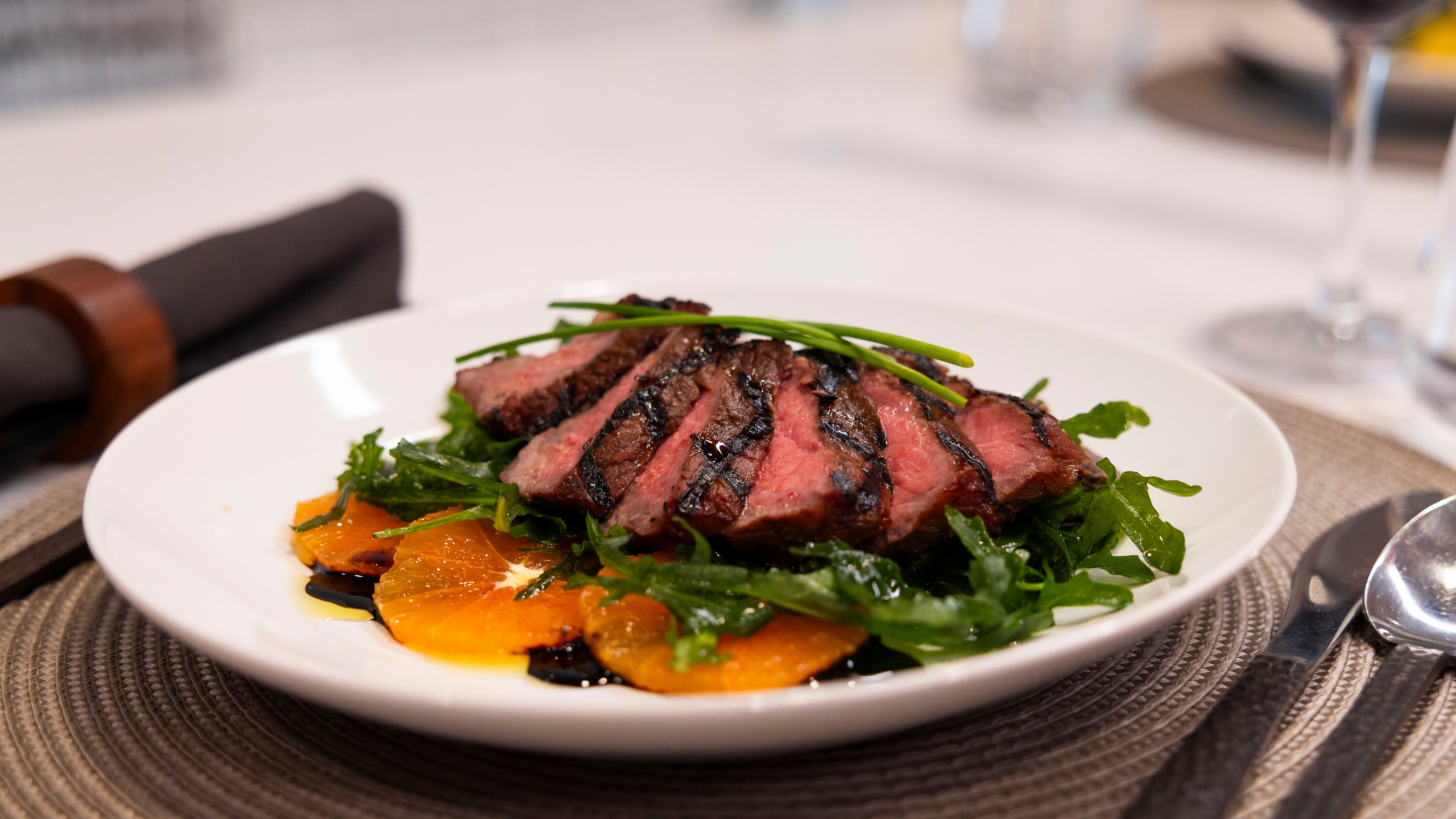
Something as simple as stock is a good example. In some communities, pre-made stock is opened, used, and forgotten. In others, the stock is made from scratch using bones, vegetables, herbs, and time. It becomes the foundation for soups, sauces, and meals throughout the week. That choice reflects something deeper. It shows planning, pride, and intention to create a base for quality, as well as a base for overall resident well-being due to reduced sodium.
In self-operated dining programs, this is where the advantage becomes clear. Those decisions are happening in-house, shaped by the team, the residents, and the community itself.
This is hospitality in senior living dining in its most practical form. Not something scripted, but something built into the way the food is prepared and shared.
If no one ever talks about it, it fades into the background.
But when that detail is shared, it becomes part of the story people carry with them. Residents begin to notice it . Families repeat it. It becomes part of how the dining program is described, not because it was promoted, but because it stood out.
Before Dining Service Begins
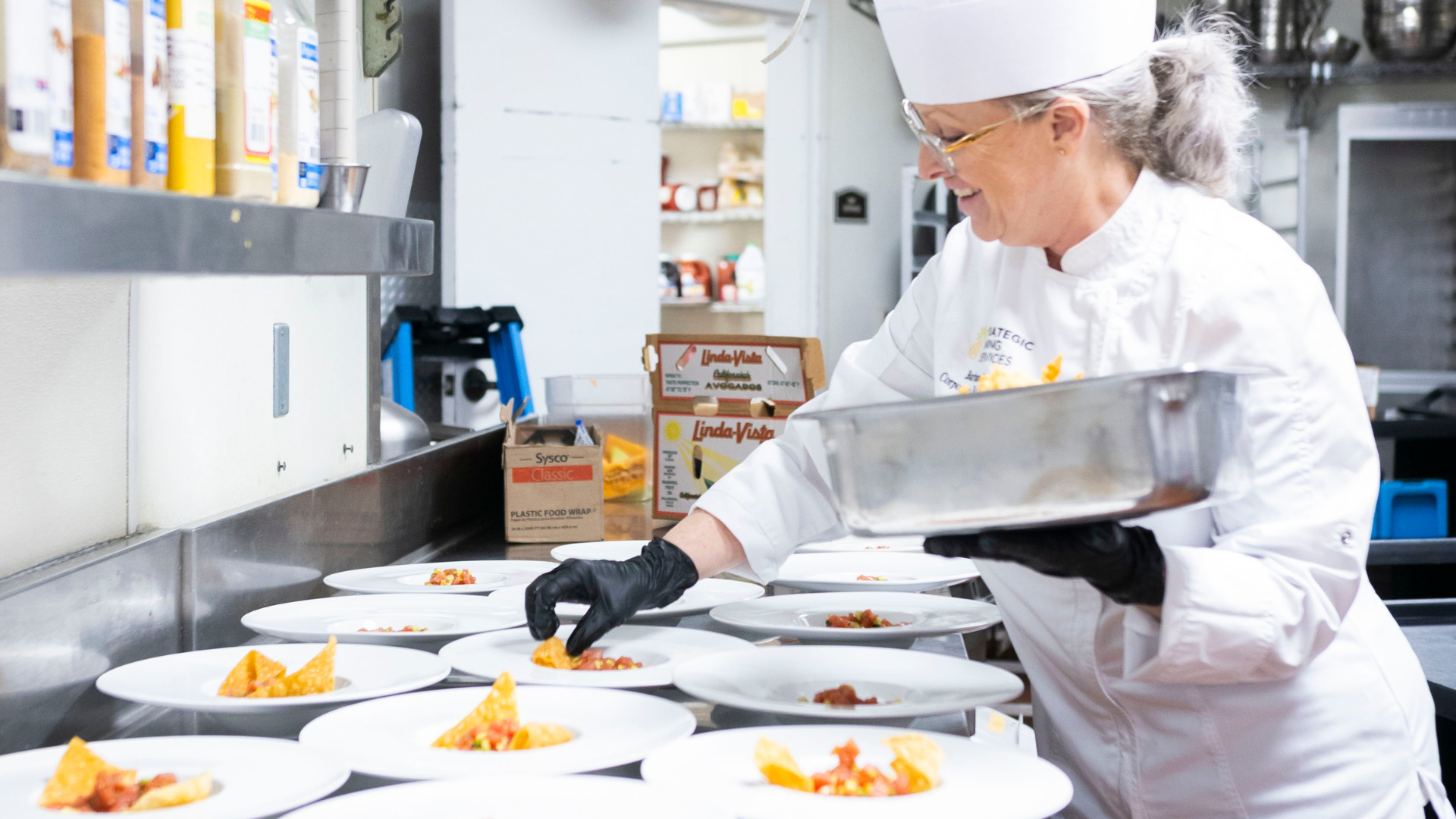
The dining experience does not start when residents sit down. It begins earlier, in the way the team prepares.
When staff take a few minutes to talk through what they are serving, taste the food, and understand why something was prepared a certain way, it changes how they show up in the dining room with more confidence and knowledge. Without that connection, service can feel routine. With it, service becomes more personal and more natural, and hospitality begins to take shape.
These moments can be a quick conversation before a meal, a chef explaining a change, or a team sharing what stands out on the menu can be enough. What matters is that the team has context.
This is where storytelling begins internally. When people understand the thinking behind the meal, they do not have to search for what to say. They simply share what they already know, and that difference shows up immediately in how they engage.
What Team Engagement Looks Like
You can see the shift in how teams move through the dining room. They are not just completing tasks or moving from table to table. They are paying attention. They are looking for opportunities to engage and anticipate the needs of their guests.
They remember preferences and adjust without being asked. The interactions feel natural, not scripted.
That kind of engagement does not come from a checklist. It comes from a team that understands hospitality is part of their role, part of the culture, not separate from it.
When Customer Service Becomes Hospitality
At a certain point, something begins to shift.
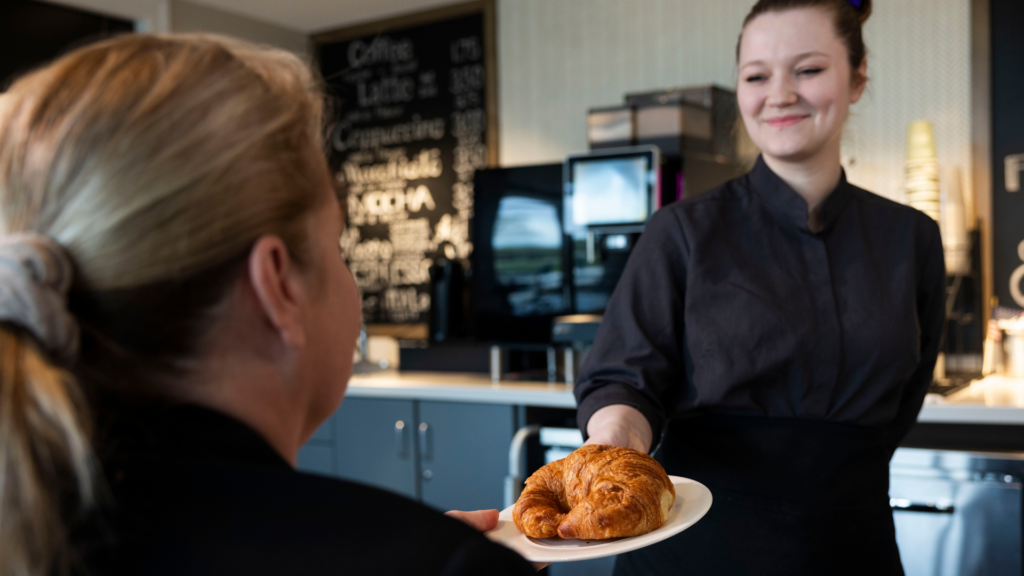
The work itself has not changed. Meals are still being served and orders are still being taken. But the experience starts to feel different. Residents are more engaged, conversations last a little longer, and the room carries a different kind of energy.
This is the point where service turns into hospitality.
Dining moves beyond tasks and becomes part of how people experience the community itself.
That shift does not come from adding more. It comes from bringing meaning forward in a way people can recognize and respond to. It is subtle, but once it is there, it changes how the entire dining room feels.
Stories Residents Share
People naturally talk about what stands out to them. Not in formal ways, but in everyday conversations with each other, with family members, and with staff.
People will forget what you said, forget what you did, but they will never forget how you made them feel. They mention a dish they enjoyed, a detail they noticed, or a moment that made them feel recognized. Families hear those stories during visits. Prospective residents hear them during tours. Staff hear them across departments.
This is where dining begins to shape a community’s reputation.
It is not coming from messaging or materials. It is coming from lived experience. Dining continues to be one of the most influential factors in how communities are perceived, especially when families are making decisions. What people hear from others who are already living there often carries more weight than anything written down.
Building a Dining Identity
Every community has something that could become its own if it is brought forward with intention.
It might be a signature dish that residents help to create and that they are proud to announce to family and friends, a recipe that has been refined over time, or a small detail that becomes recognizable.
In self-operated dining programs, this is where real differentiation begins to take shape, because the community has the ability to shape it’s own culinary experience.
It does not require large changes or added complexity. More often, it is about recognizing what is already meaningful and allowing it to become part of the experience in a more visible way.
When something feels like it belongs to the community, residents take pride in it. They talk about it differently, and it becomes part of how they describe where they live. That is what makes a dining program feel distinct.
Leadership Shapes Hospitality Culture
This kind of environment does not develop on its own. Hospitality is not a program…it is a culture that needs to be nurtured, enthusiastically, on a daily basis, starting with leadership and throughout the community. At Strategic Dining Services, the partnership begins by understanding what each community values and helps to bring that forward in a way that feels natural and sustainable. The goal is not to introduce something unfamiliar. It is to strengthen what is already there and make it easier for people to experience.
What Residents Remember Most
People may not remember every meal they have, but they will remember how it felt to be there.
The dining programs that stand out are not necessarily doing more, it’s how they are doing it. They are making sure the care, thought, and intention behind the experience are felt in ways people can carry with them.
In self-operated senior living communities, that ability to shape and share the story is already there. The difference is whether it is being brought forward and experienced as hospitality, not just service.
And over time, that is what people remember, and what sets a community apart.